Where Did I Put The Keys? And Other Senior Moments
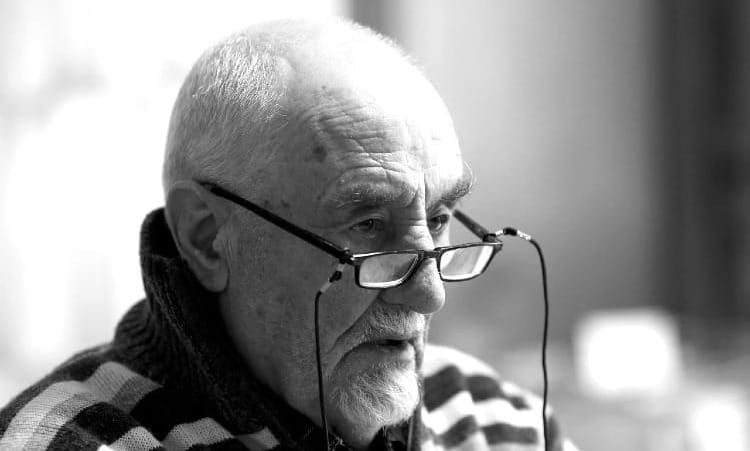
A man searches for his car keys even though he has them in his hand. Similarly his spectacles are on his head all the time. Senior moments at the age of 40 - surely not?

I know I've done it, and I bet you've done it too. You walk into a room, and you can't remember why. Then you walk back to wherever you came from, in the faint hope that it will trigger your memory. But it won't work. It will only work once you've given up, made yourself a cuppa, got comfortable and begun to read your book.
This is the doorway effect. It was documented by the psychologist Gabriel Radvansky and colleagues, who found that passing through a doorway makes people more likely to forget what they were just thinking about. It's as if the brain treats a doorway as the end of one scene and the start of another. Be assured that it happens to twenty-two-year-olds too. Their reaction is one of indifference, but add another twenty or so years to their age, and things begin to change.
Three ways of forgetting
Memory fails in different ways for different reasons, yet most of the failures men worry about are the least serious.
Absent-mindedness is the largest category by far. It's forgetting where you put the keys, and it's usually not forgetting at all. You never stored the information in the first place, because your attention was on something else when you put them down. You can't retrieve a memory that was never made. The keys are somewhere, and so is the version of you who set them down while thinking about a difficult email.
Blocking is the tip-of-the-tongue experience: the actor's name, the word for the thing, the title of the film with the bloke in it. You know that you know it, you can recall the first letter, the plot and what he was wearing, yet the name itself refuses to appear. Tip-of-the-tongue episodes become more frequent through midlife, and they're maddening, but the word almost always turns up. My father-in-law had a way of blurting out a name or a word around 24 hours after he'd struggled with his recall. We'd typically be eating a meal, then out of nowhere he'd shout something like "Zeppelin" or "Marigold". We got used to it.
Transience is the slow fading of memories that weren't revisited. It's why you can't recall what you had for lunch on 14 March, and it's perfectly normal.
None of these three is a sign of dementia, and between them they account for the great majority of the lapses that concern men in their forties and fifties.
Names
A name is arbitrary. It has no meaning to hook onto. This is the heart of the Baker/baker paradox: show people the same face and tell half of them the man is called Mr Baker and the other half that he is a baker, and a week later more of them remember the occupation. Same word, same face. But "baker" comes with associations: bread, flour, early mornings, a hat. "Baker" is a label with nothing attached.
So you haven't got worse at names. You've always been bad at things with nothing attached, and at twenty-five you were meeting fewer people, listening harder, and being introduced in a context where remembering mattered. At fifty-five you are being introduced to somebody while thinking about parking.
The usual trick of repeating the name straight away and attaching it to something is not a gimmick. It is the missing hook, supplied on purpose.
Old memories last - new ones slip
Here's a complaint I've heard many times: "I can remember the registration number of my first car, but I can't remember what I came upstairs for." And because I know you're interested, my first car was a VW Beetle, reg SCL 666.
Both halves are true, and the explanation is consolidation. A memory from 1979 has been rehearsed, retold, revisited and woven into forty years of other memories, until it's about as secure as anything in the brain. It's the story you tell, and the stories you've told most often are the best protected, which is partly why my article on nostalgia found so much of the past feeling so vivid.
A new memory, by contrast, has to be made from scratch, and making one demands attention at the moment of encoding. Attention is exactly the resource midlife erodes: divided, interrupted, tired, running on poor sleep and a steady background of other concerns. Processing speed also slows a little, as the article on getting older explained, so the window in which a new fact has to be noticed and filed is narrower than it used to be.
One warning, though. This pattern, where old memories seem fine, and new ones are patchy, is also what normal ageing looks like. What matters is how much, how often, and what it's doing to your life. I'll come to that.
The usual suspects, before you blame age
The commonest mistake with memory is blaming age first. A good doctor works through a list of other suspects before concluding that anything is wrong with the brain itself, and most of them will be familiar if you've read the rest of this site.
Sleep. Memory is consolidated during sleep, particularly deep sleep, and a single night of poor sleep measurably impairs both attention and recall the next day. My article on sleep and mental health covers this in detail. Untreated sleep apnoea, which is common in midlife men and often undiagnosed, is a particularly frequent cause of "my memory's going" that turns out to be "I haven't slept properly in years".
Chronic stress. Sustained cortisol exposure affects the hippocampus, the region central to forming new memories, as the article on what chronic stress does to the male body described. A mind running on a constant low hum of unresolved worry has less capacity to store anything new.
Alcohol. Alcohol interferes with memory formation, not just recall. If you regularly can't remember the end of an evening, that is not a funny story. It is information about what the drink is doing, and the article on alcohol and the middle-aged man deals with the longer-term picture.
Low mood. Difficulty concentrating and a sense of mental fog are common symptoms of depression, and in men, as my article on what depression actually looks like in men set out, depression often presents as irritability, fatigue and a foggy head rather than sadness. A man who goes to his doctor saying "my memory's terrible" sometimes turns out to be describing something else entirely.
Medication. Some commonly used medicines, including certain older antihistamines (some sold as sleep aids), some bladder medications, and sedatives such as benzodiazepines, can affect memory and concentration.
Hearing. This one is underrated. If you didn't properly hear something, you didn't properly store it, and the lapse looks like forgetting. Hearing loss is more common in men, and men are notoriously slow to seek help with it. Some of the "I never said that" arguments at home may be rather more about the ears than the memory.
Other medical causes. Thyroid problems and low vitamin B12 can both affect memory and are easy to test. This is a good reason to have a proper conversation with your doctor rather than make a private assumption.
Before asking whether your memory is failing, it's worth asking whether it's being starved. Poor sleep, high stress, too much alcohol, low mood and untreated hearing loss will all produce a memory that looks exactly like early decline and isn't.
The fear beneath
Let's say the thing nobody quite says out loud. When a man in his fifties loses a word in the middle of a sentence, the thought that flashes through is not tip of the tongue. It is my father, or my uncle, or the name of whoever in the family went that way.
Dementia is among the most feared of all illnesses in later life, and the fear is understandable. It isn't really a fear about keys or names. It's a fear of losing the self, because memory is, in a very real sense, who we are. As my article on downsizing put it, we build our identity out of what we've lived, and a lapse feels like a first crack in the foundation.
Men then do what men do with fear, which is covered extensively elsewhere on this site. They joke about it, "senior moment", delivered with a laugh a shade too quick. They build workarounds quietly, a hook by the door, a note on the hand, hoping nobody notices. They avoid the doctor, for the reasons described in my article on why men ignore physical symptoms. And they keep it to themselves, because to say it aloud would make it a fact, and the article on the psychology of shame in men explains the rest.
The irony is that the avoidance protects nobody. Where something treatable is going on, such as thyroid, mood, sleep, medication or hearing, early attention changes the outcome. And where it is something more serious, an early diagnosis opens up options and planning that late diagnosis closes. There is no scenario in which a year of private worry is the better plan.
There's also a reassuring and slightly counterintuitive truth here. Worrying that your memory is going is poorly correlated with it actually going. People who are anxious about their memory, who notice every lapse and keep a mental tally, are very often fine. In early dementia, awareness of the problem can be limited, and it is often the people around the person who notice first. That cuts both ways. It means your own anxiety is a poor guide, and it also means that if your family says they've noticed something, it's worth listening rather than bristling.
When it's time for a chat with your doctor
Memory lapses become worth raising when they change what you can do, rather than when they're merely annoying. The kind of thing to take seriously includes:
- Repeating yourself or asking the same question several times in a short space of time
- Getting lost somewhere you know well, such as a regular route or your own neighbourhood
- Difficulty with things you've always managed, like handling money, following a recipe, using the phone or working a familiar appliance
- Trouble following a conversation, a plot or a set of instructions that you'd have followed easily a year ago
- Regularly losing words, not the occasional tip of the tongue but a pattern of struggling for ordinary words
- Putting things in strange places, the kettle in the fridge or the keys in the bread bin, rather than just mislaying them
- Changes noticed by other people, particularly changes in personality, judgement, mood or interest
- A sudden change, or anything alongside confusion, new weakness, severe headache or speech difficulty, which needs urgent medical attention rather than a routine appointment
A doctor will typically ask questions, check blood pressure and take blood tests to rule out the treatable causes above, review your medication, and may offer a short memory check or refer you for a fuller assessment. Most people who go through this are told it's something they can do something about, or that it's within normal bounds, and sleep better for it.
In the UK, the Alzheimer's Society offers practical information and a support line, and is a good place to start if you'd like to understand what an assessment involves. In the US, the Alzheimer's Association runs a 24-hour helpline on 1-800-272-3900.
What actually helps
The best news in this territory is that much of what protects memory is already in your power. The Lancet Commission on dementia prevention identified fourteen modifiable risk factors that together account for something like forty-five per cent of dementia cases worldwide. They include hearing loss, high blood pressure, high cholesterol, diabetes, physical inactivity, depression, social isolation, excessive alcohol, smoking, head injury and vision loss.
Read that list again, and you'll notice it reads like a table of contents for this site. The programme that protects the mind, the body, the relationships and the mood is, to a remarkable extent, the same programme that protects the memory. So, practically:
Pay attention at the moment of storing. Most "forgetting" is failing to notice. Say it aloud: "keys on the hook." Look at the car park sign before you walk away. It feels slightly ridiculous and it works, because it supplies the attention that was missing at the moment of encoding.
Give things a home. A hook by the door, a bowl for the wallet and keys, a charging spot for the phone. You are not compensating for failure. You're removing the need to remember at all, which is how most people with good memories actually manage.
Write it down, and don't be embarrassed about it. Lists and reminders free up working memory for things that need thinking about. As the article on my tech, my rules argued, the choice of tool is yours, and a notebook counts.
Move. In a well-known study by Kirk Erickson and colleagues, older adults who walked briskly three times a week for a year showed a measurable increase in the size of the hippocampus, about two per cent, while the stretching-only comparison group showed a decline. A walk is possibly the cheapest memory intervention available, and the dog is already waiting.
Protect your sleep, ease off the drink, and keep your blood pressure and cholesterol checked. None of that is new, and all of it counts.
Get your hearing checked. It's a thirty-minute appointment with a potentially large payoff, and one of the more neglected items on the list.
Stay connected, and keep learning things that are hard. Learning a new skill with real difficulty beats a brain-training app. Learning to read fiction deeply, as my article on the case for reading fiction argued, is among the better-evidenced options.
Where was I?
Oh yes. . . So, most memory lapses in midlife are not early warning signs. They are ordinary features of attention, sleep, stress, ageing and arbitrary names, and the quiet dread they provoke is usually out of proportion to what's happening.
Some are worth a conversation, particularly when they begin to change what you can do, when other people have noticed, or when the fear itself has become the problem. The fear is no reason to avoid the question. It is, if anything, a reason to ask it early, from a position of choice rather than crisis.
As for why you went in the kitchen, you'll remember. Either at three in the morning or when it's too late to do anything about it.
Article over - feel free to comment on the number of your first registration plate.