Sleep and Mental Health: What Happens When It Goes Wrong
Most men will cheerfully admit to surviving on five hours' sleep as though it's a point of pride. It isn't. It's a slow-motion act of self-sabotage with a remarkably comprehensive list of consequences.

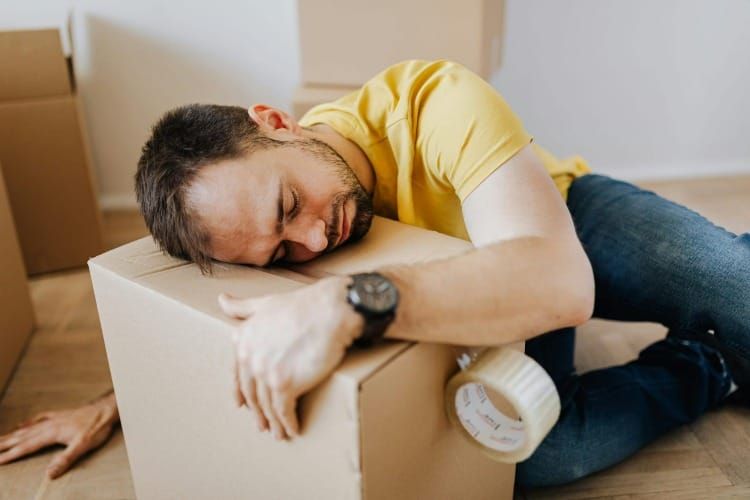
There is a particular kind of exhaustion that men in their 40s and 50s tend to carry around as standard equipment. Not the clean tiredness of physical exertion — that kind at least has the decency to resolve itself with a good night's sleep — but a deeper, more persistent fatigue that doesn't shift regardless of how long you spend in bed. The sleep isn't working properly anymore. The hours are there, more or less, but the quality isn't. You wake at 3am with your mind already running. You get up feeling like you haven't quite arrived yet. By mid-afternoon you're running on caffeine and habit.
This is extremely common. It is also extremely consequential, in ways that go considerably beyond feeling tired — and that most men don't connect to their sleep until someone points it out.
Sleep is not, it turns out, a passive state of unconsciousness during which nothing important happens. It is one of the most physiologically active periods of the day, performing maintenance functions that are so fundamental to both physical and mental health that when they're disrupted, the effects radiate outward into almost every aspect of functioning. The relationship between sleep and mental health is not peripheral. It is central — and bidirectional — in ways that make it one of the more important things a man over 40 can understand about himself.
What sleep is really doing
The popular conception of sleep as a simple off switch — the brain powering down for a few hours while the body rests — is wrong in almost every particular. Sleep is an active, highly organised biological process involving several distinct stages, each performing specific and essential functions.
The sleep cycle runs in roughly 90-minute loops, cycling through light sleep, deep sleep and REM (rapid eye movement) sleep. Each stage does different things.
Deep sleep — also called slow-wave sleep — is where the most intensive physical restoration occurs. Human growth hormone is released. Tissue repair takes place. The immune system consolidates its activity. Memories are processed and transferred from short-term to long-term storage. And — in a finding that has attracted significant attention in recent years — the brain's glymphatic system, a kind of biological waste disposal system, activates and clears metabolic waste products including the amyloid-beta proteins associated with Alzheimer's disease. The brain, in other words, cleans itself during deep sleep. Disrupt the process, and the waste accumulates.
REM sleep is where emotional processing happens. The brain during REM sleep revisits the emotional experiences of the day, processing them in a neurochemical environment that is notably different from waking — lower levels of noradrenaline, the stress-associated neurotransmitter, mean that emotional memories can be processed and integrated without the full physiological charge of the original experience. This is why sleep is sometimes described as overnight therapy: it takes the raw emotional material of the day and does something constructive with it.
When REM sleep is disrupted — by alcohol, which suppresses it; by sleep apnoea, which fragments it; by the chronic sleep deprivation that prevents sufficient cycling through all stages — this emotional processing doesn't happen properly. The emotional residue of the day carries over, unprocessed, into the next.
What happens when it goes wrong
The effects of sleep disruption on mental health are both immediate and cumulative, and they operate through several distinct mechanisms.
The acute effects
A single night of poor sleep produces measurable changes in psychological functioning within 24 hours. The amygdala — the brain's threat-detection system — becomes significantly more reactive. Research by Matthew Walker at the University of California, Berkeley, found that sleep-deprived subjects showed 60 percent greater amygdala reactivity to negative stimuli than those who had slept normally. The prefrontal cortex, which ordinarily modulates the amygdala's responses and provides the rational brake on emotional reactions, simultaneously becomes less effective. The result is a brain that is more easily alarmed, less able to regulate its own responses, and significantly more prone to anxiety, irritability and emotional overreaction.
This is why a bad night's sleep makes everything feel worse. It's not weakness or imagination. It's measurable neuroscience.
The cognitive effects are equally significant. Sustained attention, working memory, decision-making, impulse control and the capacity for complex thinking all degrade with sleep deprivation. The man running on five hours who is confident in his judgement and performance is, in most cases, wrong — because sleep deprivation also impairs the metacognitive ability to assess one's own impairment. You don't know how badly you're functioning because the part of the brain that would tell you is among the first to go.
The cumulative effects
Chronic sleep deprivation — consistently getting less than seven hours, or getting sufficient hours but poor quality — produces a different and more serious set of consequences.
The relationship between chronic poor sleep and depression is bidirectional and well-established. Depression disrupts sleep, reducing deep sleep, increasing early morning waking, and fragmenting the night. Disrupted sleep maintains and deepens depression — reducing emotional regulation, increasing negative cognitive bias, and depleting the neurochemical resources that support mood. The two conditions form a feedback loop that, once established, is genuinely difficult to break without addressing both simultaneously.
Studies have found that people with insomnia are approximately ten times more likely to develop clinical depression than those who sleep normally. The relationship with anxiety disorders is similarly strong. Chronic sleep deprivation is associated with elevated baseline cortisol — the stress hormone — meaning that the HPA axis, the body's stress response system, is running hotter than it should even in the absence of an identifiable stressor.
The cognitive effects of chronic poor sleep accumulate in ways that mirror the early stages of dementia — impaired memory consolidation, reduced executive function, slower processing speed — and the research on sleep and long-term cognitive health is sufficiently concerning to warrant serious attention from men in midlife. The brain's nightly cleanup of amyloid-beta, dependent on adequate deep sleep, is not a trivial function. It is one of the mechanisms by which sleep protects against neurodegenerative disease, and its consistent disruption has consequences that may not become apparent for decades.
You can't sleep your way to perfect mental health. But you can, reliably and demonstrably, sleep your way into significantly worse mental health — and most men are doing exactly that.
Why sleep gets worse after 40
The deterioration of sleep quality in midlife is not imaginary, and it's not simply a matter of having more to worry about. It has biological underpinnings.
Circadian rhythm changes. The internal biological clock that governs the sleep-wake cycle shifts with age, tending to advance — meaning the urge to sleep and to wake moves earlier. This conflicts with the social and professional schedules that keep middle-aged men up later than their biology would prefer, producing a chronic state of circadian misalignment.
Reduced deep sleep. The proportion of time spent in deep, slow-wave sleep declines significantly with age, beginning in the 30s and continuing through midlife. This is the sleep stage most responsible for physical restoration, memory consolidation and the glymphatic cleaning process. Its decline is one of the reasons that sleep feels less restorative in midlife even when the duration is adequate.
Testosterone decline. Testosterone and sleep have a bidirectional relationship. Poor sleep reduces testosterone levels — research has found that a week of sleep restriction in young men reduced testosterone by 10 to 15 percent. Declining testosterone in turn affects sleep quality and architecture. Men experiencing significant testosterone decline in midlife often report changes in sleep as one of the earliest and most disruptive symptoms.
Sleep apnoea. Obstructive sleep apnoea — in which the airway partially or fully collapses during sleep, causing repeated brief arousals — becomes significantly more common in men after 40, particularly in those who have gained weight around the neck and abdomen. It is estimated that the majority of cases go undiagnosed. Sleep apnoea is strongly associated with depression, cognitive impairment, cardiovascular disease and metabolic disruption. A partner who reports snoring, gasping or observed pauses in breathing should not be ignored. A referral for a sleep study is straightforward and the treatment — typically CPAP therapy — is highly effective.
Stress and rumination. The particular flavour of midlife stress — financial pressure, professional demands, relationship complexity, caring responsibilities — is exceptionally good at producing the 3am waking that so many men in this age group experience. The mind, freed from the distractions of the day and with no immediate problem-solving available, defaults to rumination: cycling through concerns without resolution. This is not a sleep disorder in the clinical sense. It is the psychological content of midlife expressing itself at the only quiet time available.
The alcohol problem
A substantial proportion of men who report difficulty sleeping use alcohol to help them fall asleep. This deserves direct attention because it is counterproductive in a way that is not always appreciated.
Alcohol does reduce sleep onset time — it makes it easier to fall asleep. It also suppresses REM sleep, fragments sleep architecture in the second half of the night, and increases early morning waking as blood alcohol levels fall and rebound arousal occurs. The man who drinks to sleep is getting more sleep-shaped time in bed and less actual restorative sleep.
This matters not just because poor sleep is damaging but because it creates a dependence loop: alcohol disrupts sleep, disrupted sleep increases stress and anxiety, increased stress and anxiety increase the desire to drink, and drinking disrupts sleep further. Many men caught in this loop don't recognise it as alcohol-related because the initial sleep onset is relatively easy. The problem is in the architecture of what follows.
The Mind and Body section of this site covers alcohol and its relationship to men's mental health in more depth. The honest summary: if you are regularly using alcohol as a sleep aid, you are solving a short-term problem while making the underlying one worse.
What helps
The evidence base for sleep interventions in adults is clear on its hierarchy: Cognitive Behavioural Therapy for Insomnia (CBT-I) is the most effective treatment for chronic insomnia — more effective than sleeping medication in the long term, with effects that persist after treatment ends rather than disappearing when the prescription runs out.
CBT-I addresses the thinking patterns and behaviours that maintain insomnia — including the anxiety about sleep that becomes its own driver — through a structured programme that typically includes sleep restriction, stimulus control, relaxation techniques and cognitive restructuring of unhelpful beliefs about sleep.
In the UK, Sleepio is a digital CBT-I programme developed by sleep researchers at Oxford University, available free on the NHS in some areas and by subscription otherwise. It has a solid evidence base and is accessible without a GP referral. The NHS Every Mind Matters sleep hub provides free introductory resources on sleep improvement.
For men who suspect sleep apnoea — snoring, excessive daytime sleepiness, observed breathing pauses, waking with headaches — a conversation with a GP and a referral for a sleep study is the appropriate first step. The British Snoring and Sleep Apnoea Association provides useful information on symptoms and treatment options.
Beyond formal intervention, the behavioural components of good sleep hygiene are worth knowing — not because they're magic, but because they work modestly and have no side effects:
Consistency — going to bed and waking at the same time, including weekends, anchors the circadian rhythm and reduces the variability that undermines sleep quality.
Temperature — the bedroom should be cool, around 17 to 19 degrees Celsius. Core body temperature needs to drop for sleep to initiate and be maintained, and a warm bedroom fights this process.
Light — exposure to bright light in the morning anchors the circadian clock. Avoidance of bright and blue-spectrum light in the hour before bed reduces the suppression of melatonin that delays sleep onset.
The 3 am problem — lying awake in the middle of the night ruminating is best addressed by getting up, doing something calm in low light, and returning to bed when sleepy. Lying in bed trying to force sleep while the mind races is counterproductive and reinforces the association between bed and wakefulness.
Alcohol — its role has been covered above. If you use it to sleep, reducing it is one of the more effective things you can do for sleep quality, even if it doesn't feel that way initially.
When to seek help
Poor sleep that has persisted for more than three months and is affecting daytime functioning warrants professional assessment. This is the clinical threshold for chronic insomnia, and it is both common and treatable. Starting with a GP is appropriate, with a clear description of the pattern — onset, duration, middle-of-the-night waking, early morning waking, daytime consequences — rather than just a general complaint of not sleeping well.
If sleep disruption is accompanied by persistent low mood, loss of interest, or significant anxiety, these should be raised simultaneously. The relationship between sleep and mental health is sufficiently close that treating one without addressing the other tends to produce incomplete results.