Getting Older: What's Actually Happening to Your Mind
Ageing is inevitable. A lot of what men believe about what it does to their minds, however, turns out to be either wrong or considerably more complicated than they've been led to expect.

Ageing is inevitable. A lot of what men believe about what it does to their minds, however, turns out to be either wrong or considerably more complicated than they've been led to expect.
At some point in your 40s or 50s, something shifts. You walk into a room and can't remember why. You find yourself mildly irritated by things that never used to bother you. You notice that recovery — from exertion, from a bad night's sleep, from an ill-advised third glass of wine — takes longer than it once did. And somewhere in the background, a quiet question forms: Is this the beginning of the end?
The honest answer is: some of it is, some of it isn't, and some of it is actually going in the other direction. The psychology of ageing is considerably more interesting than the popular narrative of slow, inevitable deterioration suggests — and considerably more within your influence than most men realise.
What the brain actually does as it ages
The brain does change with age. That's not in dispute. Processing speed — the rate at which the brain handles new information — begins a gradual decline from around the late 20s, though for most people this doesn't become meaningfully noticeable until the 50s or 60s. Working memory, which holds information in mind while you're actively using it, also shows age-related changes. These are real effects, not imagined ones.
What tends to get less attention is what doesn't decline, and in some cases improves. Crystallised intelligence — the accumulated knowledge, vocabulary, pattern recognition and practical wisdom that builds over a lifetime — holds up well into old age and for many people continues to increase. The ability to regulate emotion tends to improve with age. So does the capacity for what researchers call integrative thinking — holding complexity, tolerating ambiguity, seeing the bigger picture. These are not trivial abilities. They happen to be the ones that matter most in the situations that matter most.
Processing speed declines. Wisdom doesn't. The brain at 60 isn't a worse version of the brain at 30 — it's a different tool, more suited to some things and less to others.
The neuroscientist Elkhonon Goldberg, who has written extensively on ageing and the brain, describes the older mind as becoming increasingly pattern-based — drawing on a vast internal library of prior experience to navigate situations quickly and efficiently, rather than processing everything from scratch. It is less nimble in some respects, but more assured in others. Whether you experience this as a decline depends largely on which abilities you're measuring and why.
The psychology of time and identity
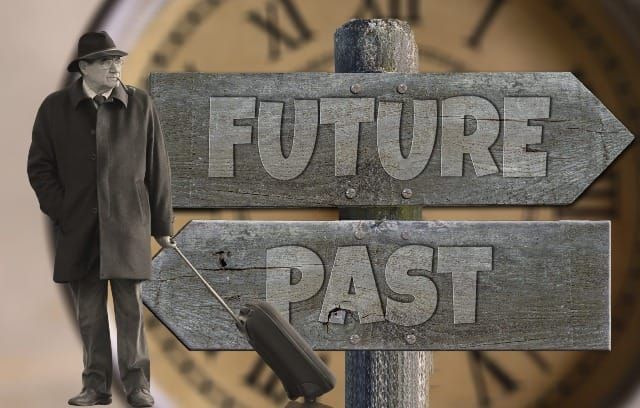
One of the less-discussed aspects of ageing is the shift in how time is perceived and prioritised. Laura Carstensen's influential Socioemotional Selectivity Theory (try saying that after your third glass) proposes that as people age and become more aware of time as a finite resource, their motivational priorities shift. Younger people tend to orient toward the future — accumulating knowledge, contacts, experience. Older people tend to orient toward the present — towards meaning, depth and emotional quality rather than breadth.
In practical terms, this often looks like a gradual but decisive editing of life. Relationships that feel hollow start to feel not just unsatisfying but actively not worth the effort. Work that once felt urgent begins to feel less so. Experiences of genuine pleasure — a good meal, a walk, an absorbing conversation — take on a weight they didn't have before. This isn't a resignation. It's a recalibration of what actually matters, and the research suggests it's associated with greater life satisfaction in later years, not less.
Men often experience this shift with some confusion, particularly if they've spent decades in roles — provider, professional, achiever — that were largely future-oriented. The internal movement toward the present and the meaningful can feel uncomfortably like giving up. It isn't.
Identity, role loss and the question of who you are now
For many men, identity has been built around doing rather than being. Career, competence, productivity, the capacity to provide and protect — these aren't superficial aspects of self but the load-bearing walls. When they change — through redundancy, retirement, health limitations or simply the passage of time — the effect on identity can be surprisingly destabilising.
This is the predictable consequence of having invested heavily in a set of roles without simultaneously developing a sense of self that exists independently of them. The man who retires at 65, having spent 40 years defined by his profession, faces a version of the same question that every significant life transition raises: Who am I when I'm not doing that?
The psychological literature on this is consistent and worth taking seriously. Men who navigate this transition well tend to have a few things in common: they have relationships that exist outside of work; they have interests that aren't purely instrumental; and they have some capacity — however underdeveloped — for reflecting on what they actually value rather than what they've always done.
Emotional life in middle and later age
Here is something most men don't expect: emotional life often gets better with age. Not easier necessarily, but richer and more regulated. The hair-trigger reactivity of younger years tends to mellow. The capacity to sit with difficult feelings without being overwhelmed by them generally improves. Researchers have described this as the positivity effect — the tendency of older adults to attend to and remember positive emotional information more than negative, and to regulate distress more effectively than younger people do.
This doesn't mean older men are immune to depression, anxiety or emotional difficulty. They aren't, and the evidence on male depression in midlife and later years is sobering enough to deserve its own article. But the trajectory of emotional regulation across the lifespan is broadly positive — a fact that tends to get lost in the relentless focus on what declines.
Men in their 50s and 60s also frequently report something that might be described as an increased tolerance for emotional honesty — both with themselves and with others. The energy required to maintain emotional defences across decades is considerable, and many men find that the older they get, the less interested they are in spending it. This can manifest as a greater willingness to say what they actually think, express affection more directly, or acknowledge difficulty without the elaborate hedging that characterised earlier years. It is, in its quiet way, a form of freedom.
The role of attitude and expectation
Becca Levy at Yale has conducted some of the most striking research on ageing and psychology, demonstrating that attitudes toward ageing — measured decades earlier — predict both cognitive function and longevity in later life. People who held more positive views of ageing in midlife lived, on average, significantly longer than those with more negative views, even after controlling for health status, depression and other confounding factors.
The mechanisms aren't fully understood, but they likely involve a combination of behavioural pathways — people with more positive ageing expectations tend to stay more active, socially engaged and health-conscious — and direct physiological effects of chronic stress associated with negative ageing attitudes.
The implication is uncomfortable for those who prefer their psychology neat and tidy: what you believe about getting older affects how you get older. The man who treats ageing as pure decline, who greets each birthday as confirmation of diminishment, may be doing himself a measurable disservice. This isn't optimism for its own sake. It's a finding with decent evidence behind it.
What ageing well actually requires
The concept of successful ageing has been in the psychological literature since the 1980s, though it has attracted its share of criticism — largely because defining success in this context is not straightforward, and early models tended to overweight the absence of disease and physical functioning at the expense of psychological and social dimensions.
More recent thinking emphasises adaptation — the capacity to adjust goals, reframe challenges and maintain a sense of meaning and purpose in the face of genuine losses. This is sometimes called selective optimisation with compensation: identifying what matters most, investing in it, and finding alternative routes when familiar ones close. It is a more honest model because it doesn't pretend that ageing involves no losses. It acknowledges them while insisting that how you respond to those losses is not predetermined.
Men who age well tend not to be those who avoided difficulty or who happened to be dealt a particularly good hand. They tend to be those who developed — sometimes late, sometimes reluctantly — a capacity for reflection and adaptation that served them when it was needed. That capacity is available at any age. It simply requires deciding that the question of how to live well in the years you have is one worth taking seriously.
Which, if you've read this far, you apparently already have.