Why Proper Fans Never Check the Forecast
Somewhere in the United Kingdom this Saturday, thousands of people are standing on an open terrace watching a team that has won one of its last eleven matches. It is ten degrees. It is raining sideways. But the forecast was never going to change the plan.

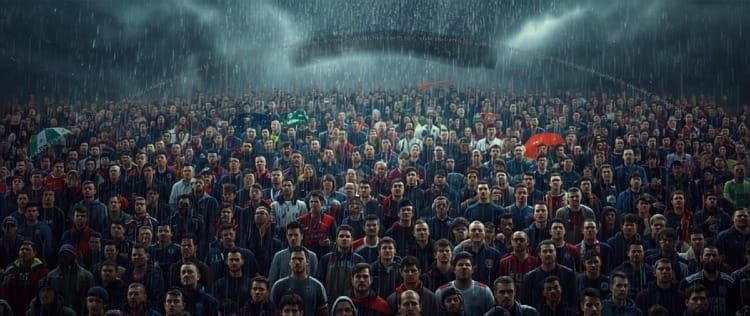
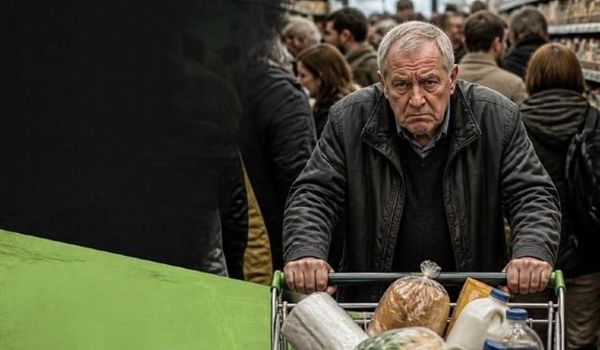
If he's lucky, he's standing at the back of a modest, half-covered stand somewhere in the lower reaches of English football. He's been doing this every other Saturday for the better part of two decades. His team has a track record of losing. He knows this, but he'll go next week, and the week after that, in whatever the weather throws up. Ask him why he bothers, and he will look mildly baffled, perhaps even offended. Bothering is not really the point.
This article is my attempt to take that man seriously, psychologically, rather than treating his loyalty as a charming eccentricity or a slightly tragic sunk-cost fallacy with a scarf on.
Doing something without reward
Simply belonging to a group and being seen, by yourself and others, as belonging to it does psychological work of its own.
This matters because it explains something that looks, on the surface, faintly irrational: continued, undiminished loyalty to a team that isn't delivering anything resembling success. The man on the open terrace in the rain is doing something psychologically distinct, and rather more robust, called identity fusion. This is a deeper, more visceral form of group belonging than ordinary identification. Turning up regardless of form, regardless of weather or eleven winless matches, is not irrational loyalty. It's a fairly reliable behavioural signature of the real deal, as opposed to the fair-weather version that evaporates the moment results stop cooperating.
The point of the ritual
My article on redundancy drew on the psychologist Marie Jahoda's research identifying five categories of psychological benefit that employment provides beyond the wage: time structure, social contact, collective purpose, status and identity, and activity. It's worth noticing that a Saturday spent at a lower-league football ground supplies a small, weekly dose of nearly all five simultaneously.
None of this requires the team to win anything. It requires only that the ritual continues, on schedule, regardless of form or weather, which is precisely why checking the forecast was never really part of the plan. A commitment that depends on the conditions being right isn't really a commitment. It's a preference, and preferences evaporate the first time something more comfortable presents itself. The proper fan removed that decision point years ago.
Reliability is the entire mechanism. A ritual that only happens when conditions are favourable provides none of the psychological stability that a ritual is actually for. The rain isn't an obstacle to the benefit. In a strange way, showing up despite it is the benefit.
Shared misery
There's a substantial body of research on what's sometimes called collective effervescence. This is a term coined by the sociologist Émile Durkheim to describe the emotional charge generated when a group experiences something together in the same physical space. Think military training to gruelling endurance events. Such issues often produce a strong shared communal bond.
But you don't need to have undertaken a stint in Afghanistan to get a similar buzz. The bonding may be different, but standing under a leaking roof in the shivering cold rooting for your team is, in its own way, broadly similar. The misery is not incidental to the social value. It's rather a significant part of what generates it.
Your health (briefly)
Standing for ninety minutes, in the cold, walking to and from the ground rather than driving directly to a padded seat, is modest but real physical activity of a kind that a great many men in midlife otherwise get very little of. The vocal exertion of actually singing, as opposed to the polite murmur of a corporate box, has documented benefits for respiratory function and mood that go beyond the purely social.
None of this is the actual point of going. But it's a fairly pleasant accident that the thing men do for identity and belonging also happens to get them outside, moving, and vocally engaged for a couple of hours a fortnight, which is considerably more than can be said for most Saturday afternoons spent at home.
The multigenerational bit
A significant proportion of lower-league support is inherited rather than chosen — a father's team, passed to a son, passed in turn to a grandson, none of whom ever conducted anything resembling a rational assessment of which club to support based on likely success. This looks, from the outside, like simple habit. It's actually doing something the article on becoming a granddad and the one on becoming a dad when you should know better both identified as genuinely valuable: a shared activity that requires no emotional articulation whatsoever, conducted side by side, that transmits something real across generations without either party needing to discuss what's actually being transmitted.
What's being transmitted, in most cases, isn't really the club itself. It's the ritual, the reliability, and though nobody involved would ever describe it in these terms, the demonstrated fact that you show up for the things that matter to you regardless of whether the immediate return justifies the effort. A boy who's stood next to his father in the rain watching a mediocre team lose nearly every other Saturday, for a decade, has absorbed a genuinely useful lesson about loyalty that no amount of direct conversation would have delivered nearly as effectively.
The forecast
Turning up, rain or shine, to watch a team that hasn't given you much to celebrate in years looks from the outside like stubbornness, or nostalgia, or a mild failure to reassess a bad decision. It's closer, on the actual evidence, to one of the more psychologically sound habits available to a man in midlife: a fixed weekly ritual that supplies structure, guaranteed social contact, a stable piece of identity, genuine physical activity, and a form of bonding that shared adversity produces rather more reliably than shared comfort ever does.
The forecast was never really the question. The question was answered some years ago, and that doesn't change because of a bit of rain.
See you on the terrace. Maybe bring a thicker coat next time.