So You're Going to Be a Granddad
Becoming a grandfather is one of the more significant events in a man's later life. It is also, it must be said, one of the more bewildering — arriving with a set of emotional responses that nobody quite prepared you for and a title that makes you sound considerably older than you feel.

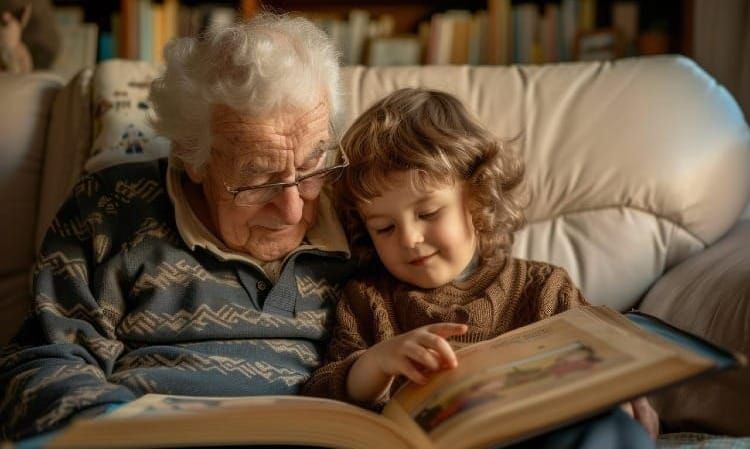
The first time you hold this small, warm, new human being who is looking at you with the unfocused expression of someone a bit baffled by it all, something happens that you were not expecting. You get all choked up.
Welcome to grandfatherhood. Where the emotional ambushes arrive without warning, the physical demands are both lower and higher than anticipated, and the whole experience turns out to be simultaneously wonderful, occasionally exhausting, faintly ridiculous and one of the better things that has happened in the second half of your life.
The title problem
Let us address, immediately, the elephant in the room. What is in a name?
Granddad. Grandpa. Gramps. Grandy. Pop-pop, if you have somehow ended up in an American film.
None of these words bears any relationship to how you think of yourself. You are not, from the inside, a granddad. You are the same person you have always been, navigating the same general experience of being alive, now with slightly worse knees and a somewhat more complicated relationship with stairs. The granddad of your imagination — the cardigan, the hard-boiled sweets, the musty smell — is another person entirely. You are not that person.
And yet. The child is going to call you something. It could be a revenge name that their parents have relentlessly 'suggested', along the lines of Grumpy. You'll find out soon enough.
The emotional thing
The love is different. Not less than the love for your own children. Not more. Different. The love for your own children arrived in the context of total responsibility — the weight of someone's entire existence depending on your capacity to manage it — which gave it a quality of anxious investment that produced, alongside the love, a sustained background of worry that most fathers don't fully register until it recedes.
The love for a grandchild arrives without the weight. The responsibility is not yours in the same way. You are not the one who has to manage the sleep deprivation, the medical decisions, the school choices, the financial provisions, the accumulated daily demands of keeping a small human alive and reasonably well-adjusted. You are, in the best possible sense, the supporting cast.
The result is a form of love that is, well, lighter. More purely enjoyable. The grandchild is handed to you in the good moments and retrieved from you in the difficult ones, which is an arrangement so thoroughly sensible that you can't believe it took three generations to arrive at.
The research on grandparental relationships and psychological wellbeing is consistent and encouraging. Grandparents who are actively involved with grandchildren report higher levels of life satisfaction, lower rates of depression and better cognitive health in later life than those who are not. The mechanism involves multiple pathways — the sense of purpose and generativity, the physical activity that small children require of the people around them, the social connection with the extended family network, and the direct psychological benefit of the uncomplicated affection that children provide.
The grandchild, in other words, is doing something rather important for the grandfather. He is just not going to admit this while there are other people present.
The arrangement whereby you get to enjoy a small child for several hours and then return it to its parents at the point where it requires something more demanding is not, as some suggest, a failure to commit. It is the most sensible social structure the human species has devised since the invention of the weekend.
The things grandfatherhood gives you
Permission to be ridiculous. Adult male life involves a sustained performance of competence and dignity that, while necessary in most contexts, has its limitations. The grandfather on the floor of the living room, making incomprehensible sounds for the entertainment of a fourteen-month-old, is not failing to maintain his dignity. He has been granted a temporary licence from it, and the relief of this, it turns out, is considerable. If you have spent several decades being the serious one, the responsible one, the one who handles things, the grandchild permits you to be, briefly and without consequence, the one who is making a noise like a train.
A different relationship with time. The grandchild, who has not yet developed a relationship with urgency, inhabits the present moment with a totality that most adults have largely lost. Time spent with a small grandchild moves at a different pace from the rest of adult life — slower, more immediate, more focused on the specific thing that is happening right now rather than the seventeen things that need to happen later. This is, as the article on in defence of the shed, notes in a different context, attention restoration operating in its purest form. The walk to the park that takes forty-five minutes because everything encountered on the way requires stopping and examining at length, is not a waste of time. It is the right pace for the thing being done.
A reason to be better. This is the one that takes men by surprise and that they find hardest to articulate. The grandchild produces, in many men, a motivation for looking after themselves. You want to be around, for the school play, for the sports day, for whatever it will be that you cannot predict but want to be present for. My article on why men ignore physical symptoms notes that one of the most effective drivers of male health engagement is the concrete motivation of someone who needs you present. The grandchild provides this in concentrated form.
A relationship with your adult child that neither of you could quite manage before. The arrival of a grandchild changes the relationship with the parent who is now your child's parent — occasionally dramatically, frequently for the better. The adult child who becomes a parent understands something about you, specifically about the experience of caring for someone helpless, that they could not understand before. The conversations that were not possible before the grandchild are sometimes possible now. This is not universal, and it is not automatic. But it is common enough to be worth noting.
A second chance quality — carefully handled. Many grandfathers describe a dimension of grandfatherhood that involves the application of what they learned from the first time. The patience that was harder to access when the children were young and the pressures were greater. The presence that the career demands were constantly competing with. The enjoyment of the small things that urgency made difficult. This second-chance quality is real and valuable — and requires one important qualification. It is not a corrective to the parenting. The grandchild is not a vehicle for demonstrating to your adult child how parenting should be done. The moment the grandfathering becomes a commentary on the parenting, the arrangement stops working. Rapidly.
The things grandfatherhood costs you
It would be dishonest to present grandfatherhood as an unalloyed collection of benefits without acknowledging the specific costs, which are real and which nobody in the congratulating phase tends to mention.
Your back. Small children require adults to operate at heights that adult spines were not designed for. The getting up and down from the floor, the carrying, the bending, the crouching at the specific angle required to examine the interesting thing at pavement level — all of this is conducted on a body that has opinions about it. The grandfather who spends a Saturday with a toddler will spend at least part of Sunday discovering muscles he had forgotten were there. This is fine. It is the appropriate price for the experience. It is simply not the price anyone mentioned.
Your sleep. The grandchild who stays overnight — which will happen, because your own child (the parent) will at some point need to sleep and you will, in a moment of entirely genuine generosity, offer — has not yet developed the social convention of sleeping when it is dark. This is not a character failing on the grandchild's part. It is a developmental fact. The grandfather who agreed to the overnight stay will, at approximately three in the morning, remember that developmental fact with some clarity and will wish that the moment of genuine generosity had been accompanied by a slightly more detailed cost-benefit analysis.
Your bank account. The grandchild arrives in a commercial ecosystem of extraordinary efficiency. Toys, clothes, experiences, educational materials, books, games, outings — the modern grandchild is a thoroughgoing economic event, and the grandfather who thought he was done with school fees and similar financial impositions discovers that grandparenthood has its own entry in the household budget. This is both fine and entirely predictable. Nobody predicted it.
Your car. The car that was, until recently, a reasonably ordered environment with the radio tuned correctly and nothing on the floor, becomes a vehicle that contains a car seat, several items of small clothing, a rogue raisin in the seat cushion of uncertain vintage, and a rear-view mirror smudged at child height. This is, in the accounting of grandfatherhood's costs, a minor entry. It is nonetheless an entry.
Your schedule. Grandfatherhood, once established, has a specific quality of availability that the working years did not cultivate and that retirement makes possible — and which the parents of the grandchild discover with notable efficiency. The grandfather who is available is a resource. This is both a compliment and a logistical reality. The management of availability — the maintenance of your own time and activities alongside genuine investment in the grandchildren — requires more explicit negotiation than most grandfathers anticipate when they say, with entirely genuine enthusiasm, that they'd love to help.
The granddad you want to be
The research on grandparental relationships — and there is a reasonable body of it — identifies several consistent features of the grandfather-grandchild relationship that tend to produce the best outcomes for both.
Presence over provision. The grandfather who is present — who shows up, who pays attention, who is genuinely there when he is there — tends to matter more to grandchildren than the one who provides materially.
Toddlers don't embrace the adult concept of 'quality time'. To them, you're either there or you're not. They do not remember the expensive toy. They remember being chased around the garden by someone who was laughing and trying to tickle them.
Engagement over management. The grandfather who plays — who enters the child's world on its own terms rather than managing the interaction from the adult's perspective — produces a different quality of connection from the one who supervises. This requires a degree of ego suspension that some men find initially uncomfortable and most find, after a very short time, entirely natural and rather enjoyable.
Stories. The grandfather is, potentially, one of the most valuable narrative resources a child has — a living connection to a history and a context that the child cannot otherwise access. The family stories, the personal history, the account of what things were like and what happened — these are not simply entertainment. They are the transmission of identity and continuity that grandparents are uniquely positioned to provide. The child who knows where their family came from, what their grandfather experienced and who he was, has something that cannot be replicated by anything else.
Restraint in the parenting arena. This deserves its own entry because it is the most common source of friction in the grandparental relationship and the one most easily avoided. The way the parents are doing things is the way the parents are doing things. It may differ from the way you did things. It may differ from the way you would do things now. Unless it is causing genuine harm — which is a high bar — it is not your territory. The grandfather who cannot resist the commentary, the comparison, the subtle or not-so-subtle indication that things were done better in a previous era, is the grandfather who finds the visits becoming less frequent.
Knowing the article on why kids need you to act your age, applies to you too. The grandfather version of this is slightly different from the father version — the licence for indulgence and general benign irresponsibility that grandparents have traditionally enjoyed is legitimate, and the research supports it. The grandchild needs you to be warm, engaged, available and genuinely interested. They don't need you to be cool. They need you to be present.
The identity dimension
Grandfatherhood is, like most significant life transitions, an identity event as well as a relational one. The man who becomes a grandfather has moved into a stage of life that carries specific cultural associations — some accurate, some not, most of them in need of revision. The grandfather of the popular imagination is a background figure, genial and dispensable, supplementary to the actual action of family life. This is not an accurate description of what active grandfathering involves or what it contributes.
The research on generativity — the psychological concept developed by Erik Erikson to describe the investment in the generation that follows — identifies it as one of the most significant sources of meaning and purpose available in later life. The grandfather who is genuinely invested in his grandchildren's development and wellbeing is not doing something supplementary. He is doing something central to the psychological project of the later decades — contributing something of genuine value to lives that will outlast his own.
This is, if you think about it clearly, a rather considerable thing to be part of.
The identity adjustment that grandfatherhood requires is not the reluctant acceptance of a diminished status. It is the recognition that the stage you have entered has its own specific value — different from the value of the earlier stages, not less than them — and that the name, however it sounds, carries something worth carrying.
Granddad. It grows on you.