In Defence of the Garden Shed
The shed has been mischaracterised for decades as a place men go to avoid their responsibilities. The evidence suggests it is, in fact, a place men go to remain capable of meeting them.

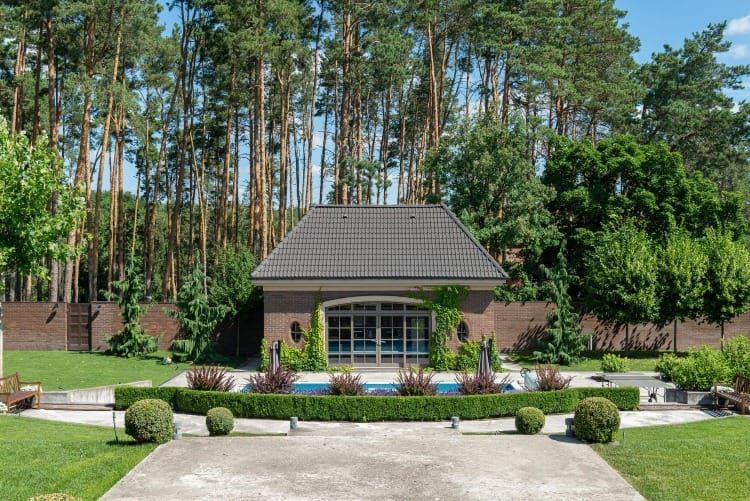
The humble garden shed has a public relations problem. In the cultural imagination, the shed is where men go to escape — from the house, from the family, from the demands of domestic life, from the conversations they'd rather not have. It is the man cave with splinters. The bolt-hole of the emotionally unavailable. The physical manifestation of the male reluctance to be fully present in the life that is theoretically happening indoors. It appears in sitcoms as a punchline, in relationship counselling as a symptom, and in architectural supplements as something requiring urgent renovation into a home office or a yoga studio before it can be taken seriously.
This characterisation is wrong, in ways that matter — not just for sheds, but for what sheds represent: the human need for solitude, personal space, and environments in which you are accountable to nobody but yourself. These are not pathological needs. They are fundamental ones, and the evidence for their importance to psychological health is considerably more robust than the cultural commentary on shed-dwelling men would suggest.
This article is a defence of the shed. Not of any particular shed — though if yours has a kettle, a radio, and something actually being made or repaired in it, it is probably doing all the right things — but of the principle the shed embodies. The principle that a man requires, among the other components of a functioning life, somewhere that is his. Not shared, not negotiated, not optimised for anyone else's requirements. His.
What solitude is — and isn't
Before defending the shed, it is worth defending solitude, because the two are connected, and solitude has its own public relations problem.
Solitude is frequently confused with loneliness, which is the experience of unwanted social isolation. They are almost opposites. Loneliness is the pain of insufficient connection. Solitude is the chosen, temporary withdrawal from connection to recover, reflect, and return to it more fully. The distinction is not subtle — one is a deprivation, and the other is a resource — but it tends to get lost in a culture that treats aloneness as inherently suspicious and sociability as inherently virtuous.
The research on solitude and psychological restoration supports this position. Time alone — genuinely alone, in a space that doesn't demand social performance — produces measurable reductions in cognitive load, stress arousal and the specific fatigue associated with sustained social engagement. It allows the kind of unstructured thinking that social contexts don't accommodate: the wandering attention that produces creative connection, the processing of experience that requires quiet rather than conversation, the simple recovery of a nervous system that has been managing social demands all day.
Men, in general, require more solitude than they typically get — not because they are antisocial but because the environments in which most of them spend most of their time make sustained aloneness difficult to achieve. The open plan office. The family home. The phone that provides the simulation of social demand even in physical isolation. The shed — or whatever space serves its function — is the structural solution to this problem.
The attention restoration theory
In 1989, the environmental psychologists Rachel and Stephen Kaplan published their Attention Restoration Theory, which has become one of the more influential frameworks in environmental psychology and one of the more useful explanations for why certain environments — including sheds, particularly those in gardens — produce the kind of psychological restoration that others don't.
The Kaplans distinguished between directed attention — the focused, effortful, top-down cognitive engagement required by work, problem-solving and social navigation — and involuntary attention — the effortless, bottom-up engagement produced by environments and stimuli that are inherently interesting without being demanding. Directed attention is the cognitive resource most depleted by modern working life. It is also the one most directly restored by environments that engage involuntary attention.
Natural environments — gardens, landscapes, anything with the qualities the Kaplans called fascination (intrinsically interesting without being overwhelming), extent (a sense of being in a whole world rather than a fragment), being away (psychological distance from the demands of ordinary life) and compatibility (a fit between the environment and what the person needs) — are particularly effective at restoring directed attention because they engage involuntary attention without depleting it.
The shed at the bottom of the garden, surrounded by the ambient information of a natural environment, engaged in a task that requires practical skill rather than directed cognitive effort, with no phone signal worth mentioning and nobody requiring anything — this is attention restoration operating as the Kaplans described it. The man who emerges from two hours in the shed feeling more capable of dealing with the rest of his life is not imagining the improvement. He has given the depleted cognitive resource the conditions it needs to recover.
The shed is not where men go to stop functioning. It is where they go to recover the capacity to function — which is a distinction that most shed critics have failed to grasp, possibly because they've never needed to restore their directed attention with sufficient urgency to understand why it matters.
Autonomy and the psychology of personal space
There is a second psychological function of the shed that is distinct from restoration and equally important: autonomy.
Autonomy — the sense of having control over one's own environment, choices and activities — is one of the three basic psychological needs identified in Self-Determination Theory, the influential framework developed by psychologists Edward Deci and Richard Ryan. Alongside competence and relatedness, autonomy is identified as a fundamental requirement for intrinsic motivation, psychological wellbeing and the kind of sustained engagement with life that produces flourishing rather than merely functioning.
The domestic environment of shared adult life is, by its nature, a negotiated one. The furniture, the temperature, the organisation of spaces, the timing of activities — all of these are the product of ongoing compromise between people whose preferences differ. This is appropriate and necessary. It is also, over time, a source of low-grade autonomy depletion that most men would struggle to name but that the right kind of personal space directly addresses.
The shed is, in the Self-Determination Theory framework, an autonomy environment. The man in his shed organises the space according to his own logic, pursues activities according to his own priorities, and operates without reference to anyone else's requirements or preferences. The tools are where he put them. The temperature is what he set it to. The project on the bench is progressing at the pace he chooses, toward the outcome he decided on, according to standards he established.
This sounds like a description of ordinary individual freedom, because it is. What makes it psychologically significant is that it is relatively rare for men in shared domestic and professional lives — lives structured largely around others' requirements — and that its absence, sustained over years, produces a specific variety of psychological constraint that expresses itself variously as irritability, restlessness, and the kind of low-grade dissatisfaction that is difficult to attribute to any specific cause.
The research on personal space and psychological wellbeing is consistent: people who have access to environments they can control, organise and inhabit according to their own preferences report higher wellbeing than those who don't. This is not an argument for selfishness or withdrawal. It is an observation about the basic psychological requirements of a functioning adult self.
The making dimension
Many sheds are not simply retreats. They are workshops — places where things are made, repaired, constructed and restored. This dimension deserves attention because it adds a third psychological function to the two already described: the satisfaction of visible, tangible creation.
The psychologist Kelly Lambert has spent her career studying what she calls effort-driven rewards — the particular satisfaction produced by activities that involve physical effort and produce visible outcomes. Her research suggests that the neural systems underlying mood and motivation were developed in environments where purposeful physical activity and tangible results were the normal conditions of daily life, and that these systems are poorly served by the abstract, invisible and often inconclusive work that characterises much of modern professional life.
The man who spends a weekend building a bookcase, repairing an engine, making a piece of furniture or restoring a machine is engaging these systems in a way that most of his professional activity doesn't. The result is tangible. Progress is visible. Competence is demonstrated in a form that can be seen and touched. The feedback is immediate and unambiguous in a way that almost no knowledge work provides.
Lambert's research found that activities involving the hands — craft, making, repair, construction — produce reliable improvements in mood and reductions in anxiety through this effort-driven reward mechanism. The shed that contains a project — something being made or fixed, something that didn't exist before and will exist because of sustained physical effort — is providing a psychological input that the rest of most men's lives does not.
The man who finishes something in his shed and stands back to assess it is not indulging himself. He is producing one of the more reliable inputs to psychological wellbeing available outside a clinical setting.
The shed as identity space
There is a dimension of the shed that becomes particularly significant in midlife and later life — its function as an identity space.
The transitions of midlife and later life tend to disrupt the professional identities that have structured adult selfhood for decades. The man who retires, changes career, or moves into a different phase of life loses not only the role but the environment, the skills and the daily evidence of competence that the role provided.
The shed, for men who have maintained one, provides an identity continuity that is independent of professional role. The woodworker who retires from a career in finance is still a woodworker in his shed — still competent, still producing, still the person who made those things on the shelves in the hallway. The shed is the environment in which an identity that belongs to him, rather than to an employer or a role, continues to be enacted.
This is not a trivial function. The research on identity continuity and psychological wellbeing across the lifespan consistently finds that the maintenance of stable personal identity through life transitions is one of the most significant predictors of resilience and positive adjustment. The shed — or the allotment, or the workshop, or whatever space serves the same function — is one of the more accessible mechanisms by which this continuity is maintained.
For men approaching retirement without a well-developed shed or workshop identity, the Men's Shed Association provides a relevant starting point. The Men's Shed model — community workshops that provide the shed's psychological functions for men who don't have private ones — has developed a compelling evidence base precisely because it addresses the same needs that the private shed addresses, in a social rather than solitary form.
What the critics get wrong
The critique of the shed as avoidance — as the physical manifestation of male emotional withdrawal — is not entirely without foundation. Some men do use their sheds primarily to avoid the domestic engagement they find difficult, and for whom the shed functions as a flight from intimacy rather than a restorative retreat from it. This is a real phenomenon and worth acknowledging.
It is also worth distinguishing from the general case, because conflating the two produces a criticism that pathologises a legitimate psychological need on the basis of its misuse by a subset of users. By the same logic, reading a book could be characterised as a strategy for avoiding conversation, and exercise as a mechanism for escaping domestic responsibility — both of which are occasionally true and neither of which constitutes an argument against reading or exercise.
The distinction between restorative solitude and avoidant withdrawal is not always easy to draw, but it is not obscure. Restorative solitude produces a man who returns to the house more capable of engagement than when he left — more patient, more present, more functional. Avoidant withdrawal produces a man who remains in the shed past the point of restoration because the house and everything in it continues to feel like a demand he'd rather not meet.
The specification
If the shed is to perform its psychological functions properly — restoration, autonomy, creative engagement, identity continuity — it requires a few things that are worth stating, not as prescriptions but as observations about what separates the shed that works from the one that merely exists.
It requires genuine physical separation from the house — not an extension, not a converted garage attached to the kitchen, but a space with enough distance to constitute a psychological boundary. The Kaplans' being away quality requires, at a minimum, the sense of having gone somewhere.
It requires a project or a purpose — something being made, repaired or attended to, however slowly. The shed that contains nothing but storage is a shed in name only. The psychological functions described above are produced by engaged activity, not by the space itself.
It requires protection from the technologies of intrusion — specifically the phone, which has an unparalleled ability to collapse the psychological distance that the shed is designed to create. The shed visit that is conducted simultaneously with the management of email and messages is not a shed visit. It is the illusion of restoration without the substance.
And it requires permission — from the man himself, and ideally from the people he shares his life with — to be used without guilt. The shed that is visited furtively, with an awareness that it will need to be justified, has already lost its autonomous function. The man who has to explain why he spent two hours in the shed has not achieved the solitude the shed was supposed to provide.
My modest conclusion
The shed is not a solution to anything. It does not resolve professional stress, repair damaged relationships, or produce the kind of psychological transformation that the more ambitious forms of self-improvement promise. It is considerably more modest than that.
What it does — when it is used for the right reasons, with the right level of genuine engagement, and for approximately the right amount of time — is provide the conditions in which a man can recover the psychological resources that daily life depletes. The directed attention. The sense of autonomy. The evidence of competence. The experience of doing something that is simply, uncomplicatedly his.
These are not small things. They are the building blocks of the capacity to engage fully with the rest of life — with the relationships, the responsibilities, the demands and the pleasures that constitute it. The man who maintains a shed and uses it well is not withdrawing from his life. He is maintaining the equipment that his life requires.
The critics who characterise the shed as an escape from life have it precisely backwards. The shed is what makes the rest of it possible.