Serious Illness in Men
The consultant says the word. The man nods, asks about the treatment schedule, whether he'll be able to drive afterwards, and whether the hospital car park validates for follow-up appointments. He is calm and practical. His wife, beside him, has noticed that he hasn't blinked for some time.

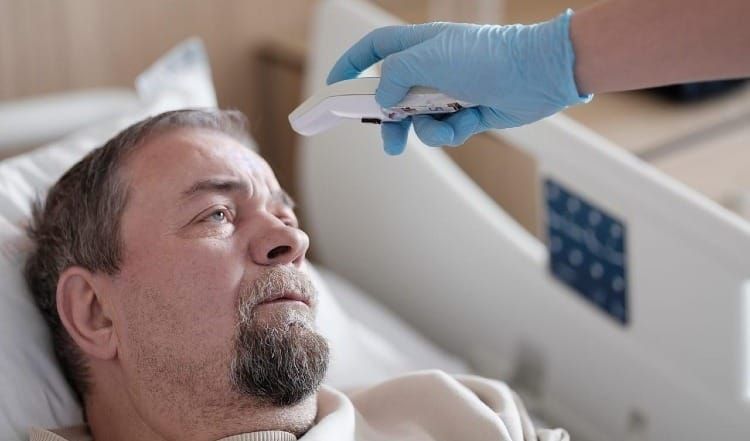
Maybe I should start by explaining what this article isn't about. It isn't about any one illness. A heart attack, a cancer diagnosis, a stroke, Parkinson's, kidney failure: each has its own medicine, its own treatments and its own particular fears, and those belong with the medical team. What they share, though, is a psychological landscape, and men tend to cross it recognisably.
The man in that consulting room has done what most men do. He has gone straight to logistics. That isn't coldness, and it isn't denial in any simple sense. It's a mind that has been handed something enormous and is reaching for the one tool it trusts, which is a plan. It's a good instinct, and it will serve him in many ways over the months ahead. It will also, if left to run the whole show, leave a good deal of what's happening to him unexamined.
The first hours
Studies of medical consultations have found, over and over, that patients forget a large share of what they're told, and the news of a serious diagnosis makes it worse. The brain under shock narrows. It hears the word, and much of what follows arrives as a kind of noise.
This matters more for men than it might seem, because of what comes next. A man who prides himself on being on top of things often leaves the appointment unable to say what was said, and he's unlikely to admit it. He'll tell his family it went "fine" or that "they're going to sort it out," and the real picture, including what he doesn't actually know, stays inside.
The practical fixes are simple, and they work:
Take someone with you, and give them the job of listening, not comforting.
Write down your questions beforehand, and the answers during.
Ask for the plan in writing, and in cancer care in the UK, ask who your named clinical nurse specialist is, because that person can answer the questions that arrive at two in the morning and that you didn't think of in the room.
The fixer and the thing that can't be fixed
For a great many men, self-worth sits on competence: the ability to identify a problem, apply effort and solve it. My article on why men who fix things are onto something described how deeply that wiring runs. A serious illness is, almost by definition, a problem that effort can't solve. You can't out-work a tumour or out-plan a failing heart. Much of the outcome is in other people's hands, and the part that is in yours, such as attending, complying and waiting, feels like the opposite of action.
That produces a particularly corrosive sense of helplessness, which the research on illness and mood identifies as one of the stronger predictors of depression. It's also why men sometimes throw themselves at the edges of the problem: researching survival statistics for hours, reorganising their finances, getting the will sorted, managing everyone else's reaction. Some of that is useful. Some of it is a way of staying busy enough not to feel the central fact.
The aim isn't to stop being a fixer. It's to redirect it toward what can be controlled: the questions you ask, the questions you push back on, the appointments you prepare for, what you eat, how you move if your team agrees, and the quality of the time you have. The article on problem-solving therapy is a good guide to that. Agency is the antidote to helplessness, and it doesn't have to be agency over the disease itself.
The instinct that makes a man good in a crisis, to assess, plan and act, is the right instinct for the first month and an incomplete one for the next twelve. Eventually the task is not to fix the illness. It's to live well alongside it.
Becoming a patient
A man in his fifties who has spent thirty years being the one who provides, drives and copes becomes, almost overnight, the one who is driven, advised and looked after. The sociologist Talcott Parsons described the "sick role" back in the 1950s, in which a person is excused from normal duties but expected to cooperate with treatment. It sounds restful. For many men, it is humiliating, and they resist.
Help, as Arie Nadler's research shows, can communicate that you're less capable, and for a man whose identity rests on competence, being helped constantly, in the most personal ways, can feel like an erasure. Some men respond by refusing help they plainly need. Others become irritable with the people providing it, which, as my article on anger as a secondary emotion explained, is very often shame in disguise.
The role reversal also reaches the people around him. The article on caring for your parents described how disorienting it is when the person who looked after you needs looking after. The same disorientation applies in a marriage when the strong one is suddenly the dependent one, and neither party has a script.
There is practical loss too. Work, income, status and plans are all put on hold at once. In the UK, cancer is treated as a disability under the Equality Act from the point of diagnosis, which gives you legal protection at work, and organisations like Macmillan can help with finances and employment. Both are worth knowing about early, because the financial strain of illness is a significant and under-discussed source of distress.
What the body takes with it
Some serious illnesses and their treatment can affect sexual function, continence, energy, strength and appearance. After prostate or bowel treatment, a heart attack or a stroke, a great many men are quietly worried about sex, about leakage, about whether they'll feel like themselves again. And a great many don't ask, because of the embarrassment covered in my article on why men ignore physical symptoms and because the topic feels trivial next to survival.
It isn't trivial. These are the things that determine quality of life; they're among the commonest sources of distress after treatment, and they're often treatable. The teams that look after men through these illnesses hear these questions daily. They won't be shocked. The sentence "I'd like to talk about the effect on sex" is routine for them, and it's much easier said in the first few visits than after a year of private worry.
The way it comes out
If the emotions underneath a serious diagnosis are fear, grief, anger and a sense of loss, they don't usually arrive in those words. In men, as I've argued repeatedly, they tend to arrive in disguise.
Irritability. The man who snaps at the nurse, his wife, the person who parked in the wrong place. The anger is real, and so is what it's covering.
Humour. Gallows humour is a legitimate way of coping, and often a good one. It's worth noticing only when it's the sole register available, and it never lets anything else through.
"I'm fine." The most common answer, and in a great many cases a reflex rather than a report. The article on alexithymia covers why some men genuinely can't tell what they're feeling, and a crisis tends to make that worse.
Flatness and withdrawal. The man who goes quiet, stops seeing friends, loses interest in things he used to enjoy. My article on why men withdraw covers the mechanism, and it applies with full force here.
Anxiety about what comes next. Fear of recurrence is one of the most common and least discussed long-term effects of a serious illness. It tends to spike before follow-up appointments and scans, which is why patients themselves sometimes call it "scanxiety". It's normal. It's also treatable.
There's also the question of mood. Depression is considerably more common among people with serious physical illness than in the general population. After a heart attack, for example, roughly one in five people have major depression. As my article on what depression looks like in men set out, in men it often looks like irritability, exhaustion and withdrawal rather than sadness, so it is regularly mistaken for the illness itself or for the treatment. It matters because it's treatable, and because untreated low mood can affect how people recover and how they take their treatment.
The protective buffering problem
Researchers call it protective buffering: hiding your worries, fears and low moods from your partner in order to protect them. He doesn't tell her how frightened he is, because she's frightened enough. She doesn't tell him how frightened she is, because he's the one who's ill. Each is shielding the other, and each ends up alone with it.
The research on this is consistent, and it isn't comforting. Protective buffering is associated with more distress in both partners, not less, and with worse relationship quality. Two people in the same room, each carrying the same fear, each working hard to make sure the other doesn't see it.
My article on how to have difficult conversations covers the mechanics, but here the essential move is simple and very hard: say one true sentence. "I'm frightened about Thursday" is usually enough. It rarely needs a follow-up. It breaks the pact of silence, and frequently the partner's reply is some version of "so am I", which is more of a relief to both of them than either expected.
When it gets dangerous
The weeks and months after a serious diagnosis are a period of elevated suicide risk. Large studies, including Swedish registry data, have found the risk is markedly higher in the first weeks and months after a cancer diagnosis, and it's a population in which men already carry the higher baseline risk. This doesn't mean it's likely for any individual man. It means it's real, and it's rarely discussed with the people it affects.
It's not all bad
Many men who've been through a serious illness report that something changed for the better, alongside the damage. Psychologists call it post-traumatic growth: a shifted sense of priorities, closer relationships, a clearer sense of what matters, and an appreciation of ordinary days. My article on what men think about death described the same thing: the way a confrontation with mortality can act as a ruthless editor of a life.
This isn't universal, and it certainly isn't compulsory. Nobody should feel they have to find the silver lining, and being told to "stay positive" by someone who isn't ill is one of the more tiresome side effects of the whole experience. Growth and distress also coexist. A man can be grateful for what the illness changed and furious that it happened, in the same afternoon.
It's also worth noting that the familiar language of battle, "fighting", "beating it", "losing the fight", suits some men and weighs on others. If the illness doesn't resolve, the metaphor can quietly imply a failure of effort, so don't impose the vocabulary.
What helps
Treat the information as a project you share. Bring someone to appointments, write things down, ask for the plan. It's the fixer's instinct pointed in the right direction.
Name what you're feeling, even privately. Fear, grief, anger. The naming principle that runs through this site works here too.
Say one true thing to one person. A partner, a friend, a nurse. See the section on protective buffering.
Ask the awkward questions early. Sex, continence, fatigue, mood. They're routine for your team, and they get harder the longer you leave them.
Find peers. Few things help as much as talking to a man who has been through the same thing. In the UK, Macmillan (0808 808 00 00), Prostate Cancer UK, the British Heart Foundation, the Stroke Association and Maggie's all run support groups, helplines and online communities, and many are good with men who'd rather not "share".
Keep some structure and some movement, where your team agrees. The article on redundancy described what happens to a man when structure disappears, and illness does the same.
Tell your doctor about your mood, and don't assume low mood is simply part of being ill. Psychological support is a normal part of care, and many cancer centres offer it directly. Approaches like CBT and acceptance-based therapy have good evidence for people living with serious illness.
For the people around you:
Offer practical help, not advice. A lift, a meal, company at an appointment. Men accept autonomy-oriented help far more readily than help that takes the problem out of their hands.
Do something side by side. A drive, a walk, a match on the radio. Hard conversations come more easily when nobody has to look at anybody, as the article on the long and winding road described.
Ask a real question, once, and mean it. "How are you actually finding it?" lands differently from "how are you?" And then be able to hear the answer.
Don't push positivity. "You've got to stay strong" is not a gift. Let him be frightened.
Closing thoughts
A serious illness is a medical event first and a psychological one almost immediately afterwards. Men tend to meet it with instincts that are admirable in a crisis, such as planning, composure and getting on with it, and that are incomplete for the long stretch, because the long stretch isn't a problem to be solved. It's a life to be lived under altered conditions.
The difficulties are fairly predictable: the helplessness for a man who fixes things, the loss of the role, the private worries about the body, the feelings that arrive in disguise, and the silence between two people each trying to protect the other. So are the things that help: a shared plan, one true sentence, honest questions to the medical team, other men who've been there, and attention to mood.
The man in the consulting room asked about the parking, and that was entirely understandable. The rest of the conversation can be had in the car park afterwards, or at home, or in the pub, and it's worth having.