Man and Dog
The relationship between men and dogs is one of the oldest in human history. It is also, it turns out, one of the most psychologically significant — and one of the least likely to be recognised as such by the men most benefiting from it.


There is a man — and you know him, or you are him — who will tell you, with complete sincerity, that he got the dog for the children. Or for his wife. Or because the house needed a bit of life in it. Or because the rescue centre had this one particular animal that looked at him in a specific way, and the next thing he knew, there was a dog bed in the kitchen, forty kilograms of dry food in the utility room and a lead hanging by the front door.
He did not get the dog for himself. He will maintain this position with remarkable consistency right up until the dog dies, at which point the grief will be of a magnitude that surprises everyone, including him, and that will settle the question of who the dog was actually for rather more definitively than he would have preferred.
The relationship between men and dogs is one of the more interesting psychological stories hiding in plain sight. It is ancient — the domestication of wolves began somewhere between fifteen and forty thousand years ago, making the human-canine relationship older than agriculture, older than written language, and considerably older than most of the things men currently spend their time worrying about. It is ubiquitous — approximately a third of UK households contain at least one dog, making the dog the most commonly owned pet in the country by some margin. And it is, in the research literature, associated with a range of psychological and physical health benefits that would attract considerably more attention if they were produced by a pharmaceutical compound rather than an animal that is primarily interested in walks and the contents of the kitchen bin.
What dogs do
The health benefits of dog ownership are documented across a range of measures with a consistency that is, at this point, difficult to dismiss as sentiment.
Cardiovascular health. The American Heart Association published a scientific statement in 2013 identifying dog ownership as associated with reduced cardiovascular risk — lower blood pressure, lower cholesterol, lower rates of heart attack and better survival rates following cardiac events. The association has been replicated in subsequent studies, including a 2019 analysis in Circulation that found dog owners had a 24 per cent reduced risk of death from any cause and a significantly reduced risk of cardiovascular mortality. These are not trivial effect sizes. They are the kind of numbers that, in a drug trial, would produce considerable commercial enthusiasm.
The mechanism is partly the exercise that dog ownership enforces — the twice-daily walk that happens regardless of motivation, weather or mood — and partly the direct physiological effect of human-animal interaction, which produces measurable reductions in cortisol, blood pressure and heart rate through contact with the animal itself.
The oxytocin loop. When a man and his dog make eye contact, both experience a release of oxytocin — the neuropeptide associated with social bonding and trust. This is not a metaphorical connection. It is a documented physiological response that researchers at Azabu University in Japan have identified as the same oxytocin feedback loop that operates between human parents and infants. The dog has, in the course of its domestication from the wolf, developed the capacity to activate human bonding mechanisms that were evolved for intraspecific relationships. This is either remarkable or slightly alarming, depending on your perspective. It is also why the man who insists he's not particularly attached to the dog looks unconvincing to everyone who has observed him talking to it.
Stress regulation. The research on animal-assisted interaction and cortisol reduction is extensive and consistent. Contact with a dog — stroking, playing, simply being in the same room — produces measurable reductions in physiological stress markers. The effect is rapid, requires no cognitive engagement and operates independently of the individual's mood or intention. The man who sits down after a difficult day and is immediately joined by the dog is receiving a stress-regulation intervention that he did not request, does not have to think about and would almost certainly not seek out in any more deliberate form.
Mental health. The research on pet ownership and mental health — reviewed extensively in a 2018 meta-analysis in BMC Psychiatry — finds consistent associations between dog ownership and reduced rates of depression, anxiety and loneliness. The mechanisms include the social facilitation effects described below, the enforced physical activity, the structure that the dog's needs impose on the day, and the direct comfort of physical contact with an animal that is consistently and unconditionally pleased to see you.
That last point is worth a moment of reflection. The dog's unconditional positive regard — its complete indifference to your professional failures, your social shortcomings and your performance against the various metrics by which adult male life tends to be evaluated — is a significant psychological input. It is, for many men, one of the most reliably available sources of uncomplicated positive emotional experience in their daily lives. And it arrives at exactly the moments — the difficult evening, the bad week, the period of low mood — when other sources of positive emotional experience tend to be least accessible.
The dog does not know you had a difficult meeting. It does not care that the project didn't go well. It has been waiting for you specifically, all day, and your arrival is the best thing that has happened to it since breakfast. This is either a very limited emotional intelligence or a very advanced one, depending on what you think the function of emotional intelligence is.
The social dimension
One of the more practically significant effects of dog ownership on men's wellbeing is one that operates outside the direct relationship between man and dog entirely: the social contact that the dog facilitates.
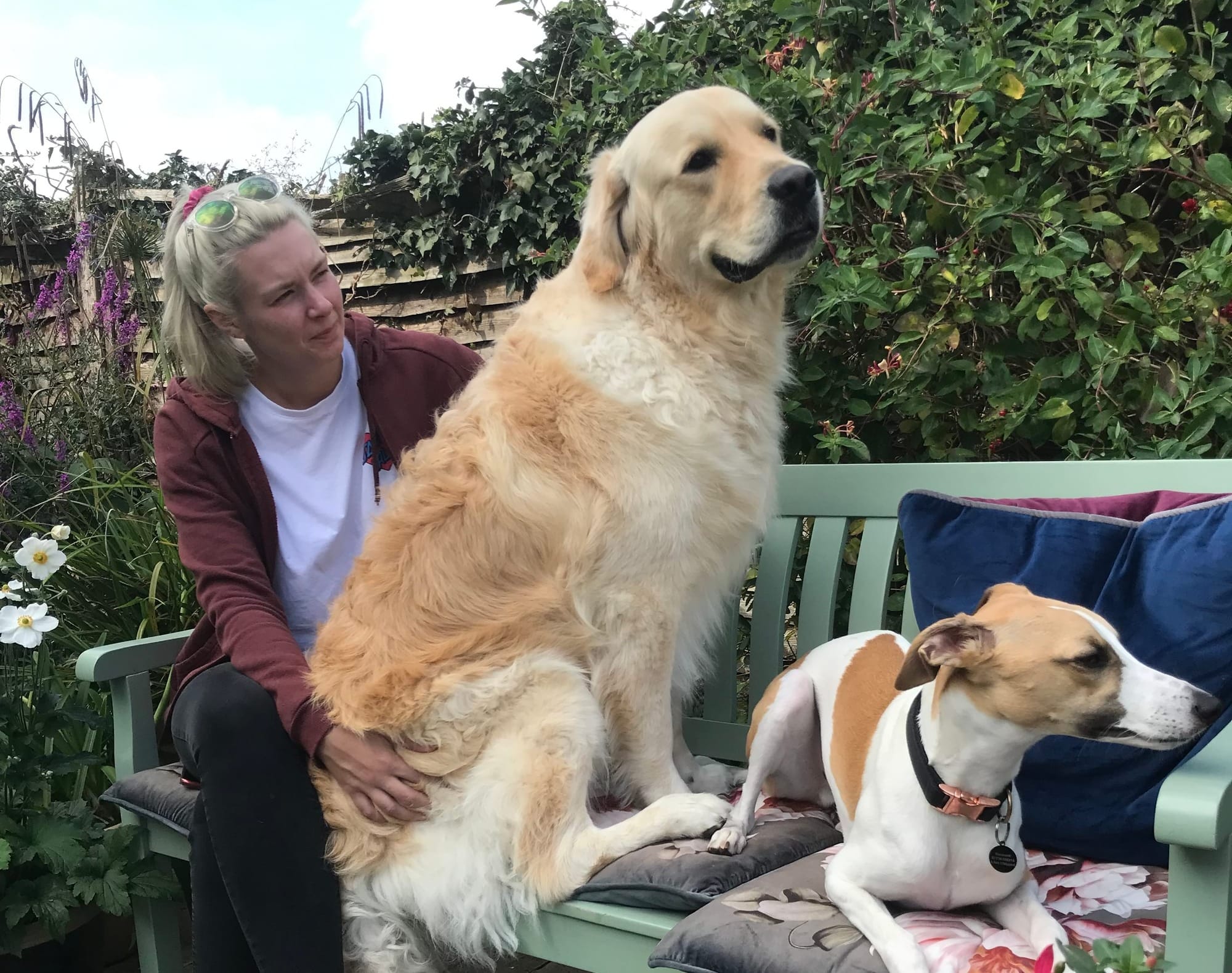
The dog walk is one of the most reliable generators of low-stakes social interaction available in modern adult life. The fellow dog owner is a pre-qualified interlocutor — someone with an immediate, shared conversational subject, an established reason for being in the same space at the same time and no particular agenda beyond the same objective as you, which is to get the dog round the park and back before the weather decides to make things interesting.
The conversations that happen between dog owners on walks have a specific quality that researchers in social psychology have identified as particularly valuable: they are regular, low-intensity, friendly interactions with people who are neither close friends nor strangers — what the sociologist Mark Granovetter called weak ties. Weak ties are among the most important components of social wellbeing, providing the sense of community connection and ambient social belonging that close friendships provide in a different register. Men in midlife and beyond, whose weak tie networks tend to contract along with their social infrastructure, find in the daily dog walk a reliable mechanism for maintaining exactly this kind of connection.
The dog also provides something that men who find direct social initiation uncomfortable tend to value enormously: a socially legitimate reason to interact with strangers without the interaction being about them. You are not asking someone to engage with you. You are asking about their dog. The dog is the topic and the excuse simultaneously, and the conversation that follows is about the dogs rather than about the men — which is, for a significant proportion of men, the conversational format they find most comfortable.
This is the side-by-side model of male connection described in my article on why male friendship is harder to maintain after 40 — operating through dogs as its vehicle. The man who makes his most sustained social contacts through the dog walk is not being socially avoidant. He is using the most natural and least threatening social structure available to him to maintain the connections that his wellbeing requires.
What men and dogs share
There is a dimension of the man-dog relationship that deserves more than a passing mention, and that tends to be underexplored in the clinical literature on pet-human bonds: the specific compatibility between male psychology and canine company.
Dogs are, in social terms, relatively uncomplicated. They communicate directly. They do not harbour unexpressed resentments. They do not require emotional attunement of a particularly sophisticated kind. They are present in the moment in a way that most humans find genuinely difficult and that men, in particular, have been consistently told they struggle with. They are loyal without being demanding. They are affectionate without requiring reciprocation in a specific emotional register.
The man whose emotional life is characterised by the alexithymia described in the article on alexithymia: when you can't name what you're feeling — the genuine difficulty in identifying and expressing emotional states — finds in the dog a relationship that does not require emotional articulation. The dog does not ask how you're feeling. It responds to your presence and your behaviour, which are the channels through which many men most naturally communicate. The relationship is conducted in a language that is more accessible than the emotional vocabulary that human relationships tend to require.
This is not a counsel for replacing human relationships with canine ones — the dog cannot provide what a close human friendship provides, and the man who uses the dog to avoid the vulnerability that human intimacy requires is using it in a way that serves his avoidance rather than his wellbeing. But as a complement to human relationships — as a source of connection that operates in a register that many men find more accessible than its human equivalent — the dog is doing something genuinely valuable.
The grief nobody prepares you for
Any account of the man-dog relationship has to address the end of it, because the end of it tends to arrive with a psychological force that surprises the man who has been insisting throughout that he got the dog for the children.
I know from my own experience that the grief following the death of a dog is real, significant, yet substantially unacknowledged by a culture that has not quite decided whether the loss of an animal warrants the same social permission as the loss of a person. The result is what the bereavement literature calls disenfranchised grief — grief that is genuine but socially unrecognised, that receives less support and less acknowledgement than its emotional weight warrants, and that is therefore processed less effectively and more painfully than it might be.
Research on pet bereavement consistently finds that the grief following the loss of a pet is comparable in intensity and duration to the grief following the loss of a close human relationship — a finding that surprises many people and that surprises fewer of those who have experienced it. The dog was not incidental to daily life. It was woven into the structure of it — into the morning routine and the evening walk and the particular quality of the house's inhabited feeling. Its absence does not leave a gap proportionate to its size. It leaves one considerably larger.
For men who did not, throughout the dog's life, acknowledge the depth of the attachment — who maintained the position that it was the family's dog rather than theirs, who deflected the question of how they felt about it with the standard repertoire of male emotional management — the grief can be particularly disorienting. They are grieving something they never quite admitted having.
The appropriate response to this — from the man himself and from the people around him — is not to minimise the loss because it was a dog rather than a person. It is to acknowledge it as what it is: the genuine loss of a relationship that mattered, expressed through the only channel of grief that the culture has left consistently open to men, which is often the loss of an animal rather than a person, precisely because the permission to grieve it fully is, paradoxically, slightly more available.
The breed question and what it reveals
A brief and only partially serious excursion into the psychology of breed selection, because it is both genuinely interesting and slightly revealing.
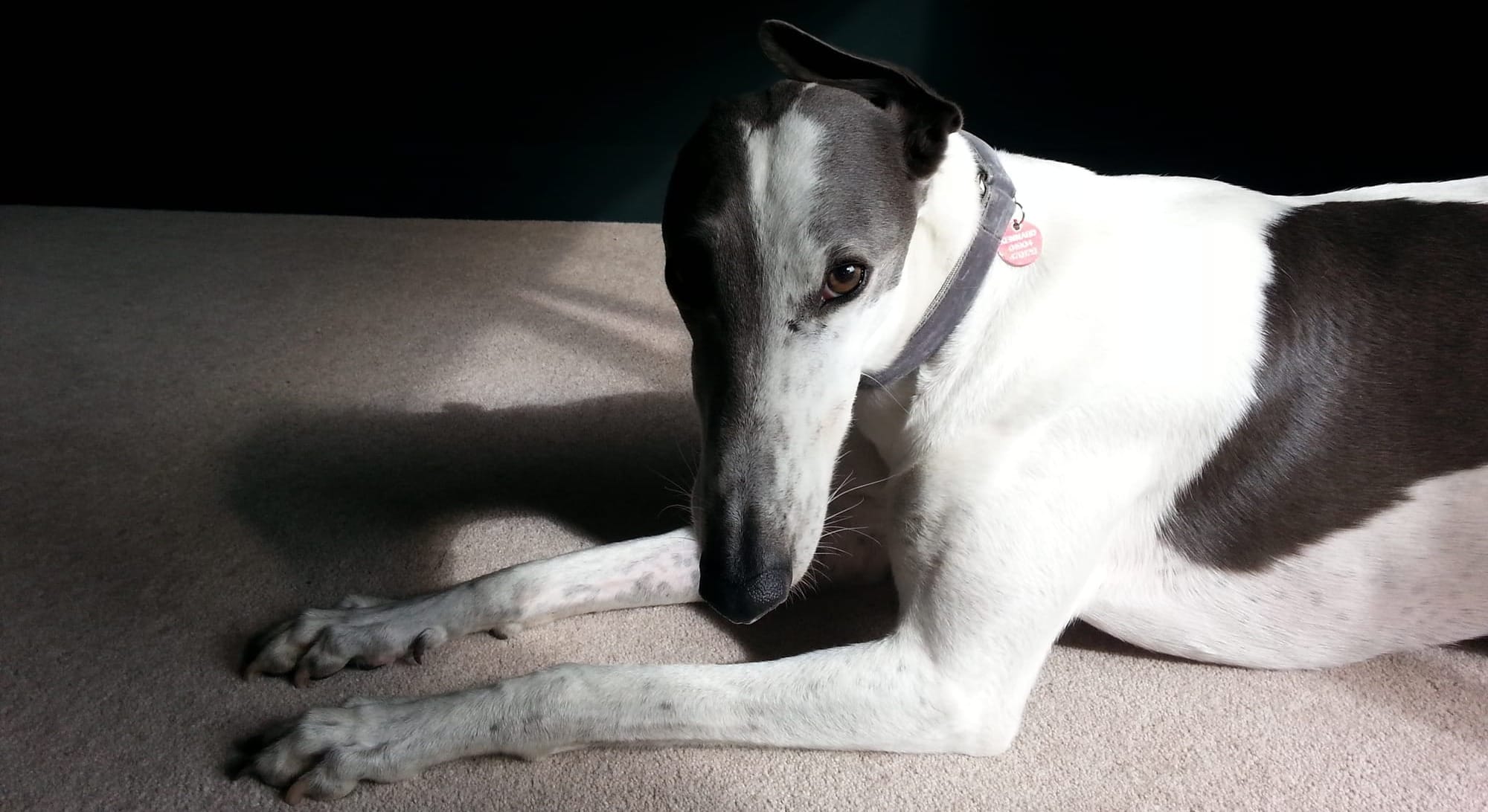
The dog a man chooses tends, with more consistency than strict rationality would predict, to reflect something about his self-concept. The man who chooses a working breed — a springer spaniel, a border collie, a retriever — is typically making a statement about activity, practicality and the outdoors that is as much about himself as about the dog. The man who chooses a large, physically imposing breed — a German shepherd, a Rottweiler, a Dobermann — is, the research on pet selection suggests, often reflecting something about the identity values of strength, loyalty and protection. The man who ends up with a small breed that was chosen primarily by his partner and which he now carries under his arm at the park while pretending to be elsewhere — he is a different study entirely.
The research on human-animal similarity suggests that people tend to perceive their dogs as similar to themselves in personality — scoring their dogs higher on the personality dimensions they score themselves higher on — and that the relationship is partly sustained by this perceived similarity. The dog is, in some sense, a version of the self that is less complicated, more loyal and considerably better at napping.
This is not an entirely unserious observation. The relationship with a dog involves, among other things, the projection of qualities that the man values — loyalty, directness, uncomplicated affection — onto an animal that is sufficiently like a person to sustain the relationship and sufficiently unlike one to require none of its more demanding emotional requirements. The dog is the uncomplicated companion that adult life rarely otherwise provides.
The walking dimension
The enforced physical activity of dog ownership deserves specific mention because it operates as a health intervention in a particularly effective way: it is not optional.
The man who tells himself he will exercise when he feels like it is, statistically, not exercising very much. The man with a dog exercises whether he feels like it or not, because the dog requires it, and the dog's requirement is non-negotiable in a way that his own intentions are not. The walk happens in the rain. It happens on a difficult morning. It happens when the motivation is at its lowest, and the sofa is at its most compelling.
Research on dog walking and physical activity consistently finds that dog owners walk significantly more than non-dog owners — on average forty minutes more per day in UK studies — and that this difference persists across seasons, weather conditions and the owner's mood. The dog has solved the motivation problem by removing the requirement for motivation. The walk is not contingent on wanting to walk. It is contingent on having a dog.
The additional benefits of the outdoor walking environment — the attention restoration described in the article on in defence of the shed, the cortisol reduction associated with natural environments, the vitamin D from whatever sunlight Britain periodically provides — compound the direct exercise benefit in ways that produce a health package that is both comprehensive and disguised as something the man is doing for the dog rather than for himself.
This is, arguably, the dog's most significant psychological service: making the things that are good for the man into things that are not optional, are not about the man's feelings, and do not require him to frame them as self-care. He is not exercising. He is walking the dog. These are, physiologically, the same thing. Psychologically, for many men, they are entirely different, and the latter is considerably more likely to happen.
Getting a dog
For the man who is reading this in the category of I've been thinking about it — particularly the man who is retired or approaching retirement, whose social contacts are thinner than they were, whose daily structure has lost the shape that work provided — the evidence on dogs and wellbeing in later life is genuinely encouraging.
The research specifically on dog ownership in older adults finds consistent benefits across measures of physical activity, social connection, psychological wellbeing and cognitive health. The enforced structure of the dog's daily requirements — the walks, the feeding, the routine that the animal both needs and provides — addresses directly the loss of structure that the articles on purpose after retirement and brains, blokes and boredom identify as one of the more significant psychological challenges of later life.
The practical considerations are real and worth thinking through honestly: the financial cost, the restriction on travel, the physical demands of some breeds, the lifespan of the animal and what that implies about timing. A dog acquired at 70 by a man in good health is a different calculation from one acquired at 70 by a man whose health is uncertain. Breed selection matters in this context — the working dog that requires two hours of exercise a day is not the right dog for the man who cannot reliably provide it, and the welfare of the animal is a genuine consideration alongside the benefits to the owner.
In the UK, Dogs Trust and the RSPCA provide guidance on breed suitability and rehoming, including the rehoming of older dogs — which tend to be lower energy, lower maintenance and, for reasons that are both practical and slightly sentimental, often in particular need of a home.
The wrap-up
The man and his dog are, in psychological terms, a more significant partnership than the man typically acknowledges and the culture typically credits.
The dog provides structure, exercise, social facilitation, stress regulation, unconditional positive regard, physical contact, a socially legitimate reason to be outdoors, and a relationship conducted in a register that requires none of the emotional articulation that many men find difficult and all of the loyalty, consistency and presence that most men find valuable.
It does all of this without being asked. Without requiring explanation. Without needing to understand what it is doing to do it.
The man who got the dog for the children — who has maintained this position through years of early morning walks, veterinary bills, the occupation of the better half of the sofa and the particular grief of the end of it — is not being dishonest. He is male. The dog knew who it was for all along.