Rocket — but not the Saturn V kind

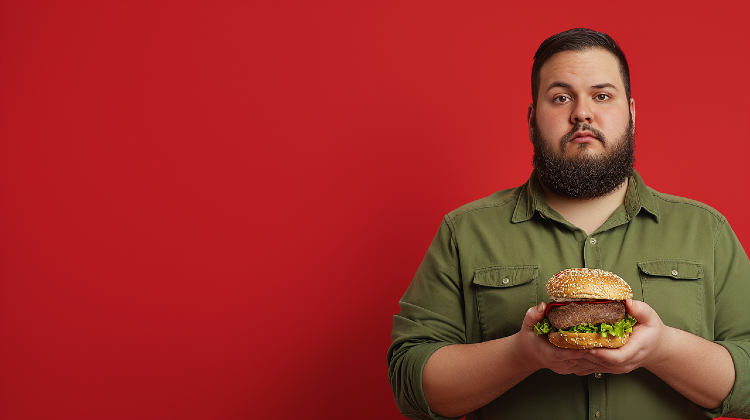
Picture the scene. You're in a modest little restaurant that used to serve things properly. Enormous pies. Chips with everything. Puddings dense enough to alter the Earth's rotation. The kind of place where the menu was laminated, the waiter and the cooks were all called Dave, and nothing was described as artisanal.
But now? Now there's reclaimed wood on the walls, a man with a ponytail and a big beard behind the bar, and a suspiciously thin waitress called Clementine. The menu has been changed. It's almost unrecognisable. It feels like you've taken the wrong turning and you're in a garden centre. You're under pressure to make a decision, and so you pick something that looks vaguely familiar, which turns out to be a salad.
Not a proper salad, obviously. Not a ploughman's lunch placed next to a pint in a pub garden while it rains horizontally. Not even a traditional side salad. No, this is a bowl of ideological misery featuring quinoa, kale, pumpkin seeds, and something called heritage beetroot.
Men do not fully understand salad. We never have. It arrives towering and theatrical, only to leave you hungrier than when you sat down, having spent much money for the privilege of eating what is, in essence, decorative landscaping with a vinaigrette.
And then there's rocket. Which, in my childhood, was something like the Saturn V. Now it's everywhere. Bitter little leaves contaminating sandwiches and pizzas. Nobody wrote to their MP requesting that their lunch be made to taste like a garden after rain. Yet here it is. Inescapable. Unavoidable.
This, then, is the story of men and salad. A relationship defined by confusion, resentment, and the faint but persistent hope that somewhere beneath the avocado there might be some chicken.
How we got here
The salad's rise to cultural dominance is one of the more puzzling developments in recent culinary history.
For most of the twentieth century, salad occupied a clearly defined and entirely reasonable position in British life. It was the thing on the side of the plate that you ate around. It consisted of lettuce, tomato, cucumber and possibly a hard-boiled egg if someone was feeling extravagant. It required no explanation, generated no conversation, and made no claims about anyone's lifestyle choices.
Then something happened. Precisely what and when is difficult to pinpoint, but it involved a collective decision by the restaurant industry that food should come with a philosophy.
Suddenly, salad was no longer a side dish. It was a statement and an art form. Kale, which a colleague of mine said used to be fed to his cows, became a superfood. This is a word invented to make people feel virtuous about eating something that tastes like a hedge. Quinoa was no longer merely a grain — it was complete protein, served by someone who wanted you to know they knew what that means.
Meanwhile, a certain number of people took to this development with what can only be described as suspicious enthusiasm. They mastered the strange social choreography of salad consumption — discussing the notes of citrus in the dressing as though reviewing a Bordeaux, identifying individual ingredients with the confidence of botanists, and somehow managing to feel full afterwards. Men stared at the plate, wondering whether they were allowed to stop for a kebab on the way home.
The psychological dimension
Now — and here is where this article earns its place on the site, rather than a restaurant review — there is something more interesting going on beneath the surface of the man-salad relationship.
The male resistance to salad is not, or not entirely, about taste. Some salads are genuinely excellent. The Caesar, for instance, is a fine thing — mainly because it contains enough anchovies, parmesan and croutons to constitute a recognisable meal.
The resistance is partly about identity. The research on food, masculinity and identity is a niche but genuine corner of the social psychology literature, and its findings are consistent: men, particularly men from traditional cultural backgrounds, tend to associate food choices with masculine identity in ways that produce specific social pressures around what they eat and in what quantity.
The steak signals appetite, physicality, and abundance — qualities the cultural script for masculinity endorses. The salad signals restraint, health consciousness, attention to appearance — qualities the same cultural script has historically associated, rather unfairly, with a less straightforwardly masculine orientation.
This is not rational. It is a set of food associations that was constructed by the same cultural forces that produced most of the other unhelpful male cultural scripts examined throughout this site. But it is real, and it influences the food choices of a significant number of men who would deny, if asked directly, that they are making lunch decisions based on gender identity.
The health bit
The research on diet and men's health in midlife is consistent across a range of measures: higher vegetable consumption is associated with reduced cardiovascular risk, reduced inflammatory markers, better cognitive function in later life and, somewhat inconveniently, lower risk of several of the cancers discussed in the article on late-onset illnesses in men,. The Mediterranean dietary pattern — which involves a remarkable quantity of things that arrive in bowls and don't have a pulse — is associated with better health outcomes than almost any other dietary approach studied in the scientific literature.
This does not mean you have to eat heritage beetroot. The research does not specifically require heritage beetroot. It requires something broadly resembling a diet that contains more plants than the average British male currently consumes, which is a bar set low enough that almost any gesture in the direction of vegetation constitutes an improvement.
The man who eats a proper Caesar salad has not surrendered anything. He has made a decision that the research supports, and that requires him to eat something that tastes good, which is an outcome available to him without any of the ideological superstructure that the artisanal restaurant industry has constructed around the concept of a bowl of leaves.
The compromise position
There is a man-salad relationship that works for both parties. It is arrived at by discarding most of the ideological apparatus that has accumulated around the subject. Assess the salad on the same terms you would assess anything else — does it taste good, does it constitute an actual meal, does it justify its position on the table? A good salad does all of these things. A bad salad does not.
Do not eat the salad as a form of self-punishment, which is the purpose it sometimes appears to serve. Do not eat it to signal virtue. Do not order it because the table dynamic seems to require it, and then spend the rest of the evening secretly furious. And do not, under any circumstances, accept a main course that consists of leaves and a decorative smear of something as though food is a medium for artistic expression rather than a mechanism for sustaining human life.
Resistance to things that are good for you — because they feel incompatible with a particular self-image, because they have been co-opted by a cultural movement that feels ideologically demanding, because the alternative is more immediately satisfying — is a pattern that runs through male health behaviour from the doctor's waiting room to the restaurant menu.
Heritage beetroot is still unnecessary.